




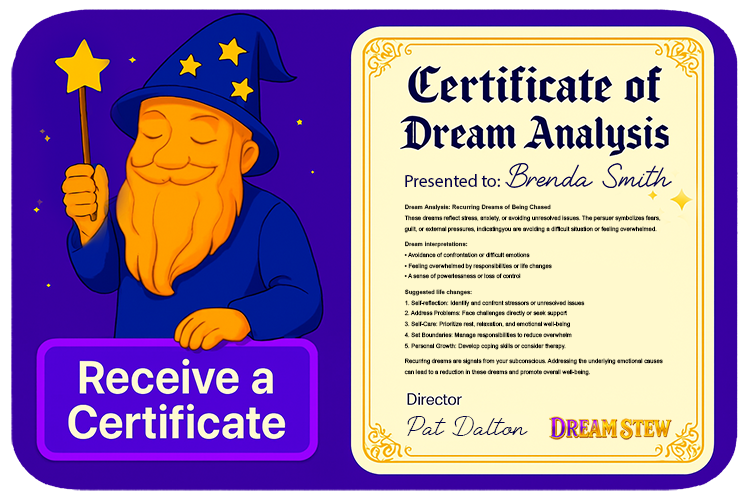
Register for a Dream Analysis and Interpretation and receive a certificate!

Dream analysis and interpretation
Dream analysis and interpretation
Dream analysis and interpretation have long held a significant place in human culture, psychology, and self-understanding. Throughout history, various civilizations—ranging from ancient Egypt and Greece to indigenous societies—have regarded dreams as messages from the divine or as gateways to hidden truths. By examining the symbolic language of dreams, individuals can gain insights into their subconscious mind, uncover unresolved conflicts, and better understand their deepest desires and fears. Dream analysis and interpretation allow for a form of self-reflection that can illuminate aspects of one’s personality that might otherwise remain obscured, fostering personal growth and emotional healing.
In the realm of psychology, dream analysis and interpretation have been instrumental in advancing our understanding of the human psyche. Dream analysis and interpretation reveal repressed thoughts and desires that influence behavior and mental health. Through systematic dream interpretation, dream analysts can help patients identify underlying issues—such as trauma, anxiety, or unresolved conflicts—that manifest in their dreams. Recognizing these patterns can lead to breakthroughs in therapy, enabling individuals to confront and integrate difficult aspects of themselves, thereby fostering a more balanced and cohesive sense of identity.
Furthermore, dreams can serve as a creative and problem-solving resource. Many thinkers and inventors have credited their dreams with inspiring innovations or solutions to complex problems. The symbolic and often surreal nature of dreams allows the mind to explore scenarios beyond the constraints of waking logic, encouraging novel perspectives. With dream analysis and interpretation, individuals can tap into their innate creativity and intuition, unlocking insights that might influence their waking lives—be it in personal decision-making, artistic endeavors, or professional pursuits. Thus, the interpretive process not only enhances self-awareness but also encourages a more flexible and open-minded approach to challenges.
Engaging in dream analysis and interpretation fosters a deeper connection with oneself and the world. It encourages a mindful attitude towards one’s internal experiences and promotes introspection. When individuals pay attention to their dreams and seek to understand their meanings, they cultivate a sense of curiosity about their inner landscapes. This practice can lead to increased emotional resilience, greater self-acceptance, and a more profound appreciation for the complexity of human consciousness. In essence, dream analysis and interpretation acts as a bridge between the subconscious and conscious mind, offering a pathway for ongoing personal development and a richer, more meaningful engagement with life.
Dream interpretation and dream analysis are fascinating fields that explore the symbolic and psychological meanings behind our dreams. By examining the imagery, emotions, and themes present in dreams, dream interpretation aims to uncover insights about an individual’s subconscious mind, desires, fears, and unresolved conflicts. Dreams serve as a window into hidden aspects of the psyche, offering clues to personal development and emotional well-being. By examining recurring motifs, imagery, and feelings experienced during dreams, individuals can better understand their subconscious thoughts and emotional states. Dream analysis combines psychological theories with personal context, helping individuals better understand themselves, resolve internal struggles, and gain clarity on their waking life experiences to uncover deeper self-awareness, resolve inner conflicts, and facilitate psychological growth, emotional healing, and develop clearer insight to their inner world.
Dream analysis
Dream analysis can be a valuable tool for personal growth and psychological understanding. By exploring the symbolism, themes, and emotions present in dreams, individuals can gain insights into their subconscious mind, revealing thoughts, feelings, and conflicts that may not be fully conscious. This process of dream interpretation helps people identify underlying issues, whether they relate to stress, fears, desires, or unresolved conflicts, allowing for a deeper understanding of their inner selves.
Moreover, dream analysis can serve as a cathartic experience, providing a safe space to process complex emotions. When individuals undergo dream interpretation, they often confront fears or anxieties that might be difficult to face directly in waking life. Recognizing recurring patterns or symbols can help them recognize triggers or sources of stress, paving the way for emotional healing and better coping strategies. It also encourages self-reflection, fostering greater self-awareness and emotional intelligence.
In dream interpretation therapy, dream analysis is often used as a complementary approach to promote mental health. By discussing their dreams with a trained dream analyst, individuals can uncover unconscious patterns influencing their behaviors and relationships. This insight that dream interpretation provides can lead to better decision-making and healthier interpersonal dynamics. Dream analysis offers a pathway to understanding oneself more profoundly, supporting emotional well-being, personal development, and an integrated self-concept.
Our dream analysis system leverages cutting-edge, state-of-the-art AI technology for dream interpretation which provides personalized, insightful, and accessible guidance for users exploring their subconscious. We analyze patterns, symbols, and themes in dreams to help individuals better understand their emotions, thoughts, and underlying issues. Our dream analysis system makes the process of self-discovery more engaging and convenient, providing users with meaningful dream interpretation insights anytime they need.
Our dream analysis system offers a user-friendly and insightful way for individuals to explore the meanings behind their dreams. To get started, simply register on our dedicated dream analysis website, creating a personalized account that allows you to access your dream reports and insights securely. Once registered, you can submit descriptions of your dreams through an intuitive interface, providing details about the imagery, emotions, and any notable symbols or recurring themes present in your dreams.
After submitting your dream, your dream description will be processed by our advanced AI dream analyst. This AI is designed to interpret dreams based on established symbolic language, psychological insights, and personalized context. It analyzes the narrative, emotional tone, and recurring motifs to generate a comprehensive dream analysis that sheds light on the subconscious messages conveyed by your dream. The AI’s dream interpretation aims to help you understand underlying feelings, unresolved conflicts, or hidden desires that your dreams might reveal.
Following the dream analysis, you’ll receive an informative, personalized dream analysis certificate. This certificate not only summarizes the key insights derived from your dream but also includes important information such as potential emotional implications, suggestions for personal growth, and prompts for further reflection. The certificate is designed to serve as a meaningful keepsake or a practical guide, empowering you to better understand yourself and your inner world. Our dream interpretation system encourages ongoing engagement, allowing users to submit multiple dreams over time and track their subconscious journey toward greater self-awareness and emotional well-being.
Dream interpretation
Dream interpretation holds a vital place in understanding the intricacies of human consciousness and the ways in which our subconscious mind communicates with us. Dreams often serve as a mirror reflecting our internal landscape—our hopes, fears, unresolved conflicts, and unacknowledged emotions. By interpreting these nocturnal messages, individuals can gain clarity about their mental and emotional states, which might be difficult to access through everyday conscious thought. This process can uncover hidden motivations and patterns of behavior, providing valuable insights that enable individuals to make more informed decisions and develop greater self-awareness. In this way, dream interpretation functions as a tool for self-discovery, helping individuals navigate their inner worlds with greater understanding and compassion.
Beyond personal insight, dream interpretation can play a crucial role in emotional regulation and healing. When people experience recurring themes or symbols in their dreams—such as feelings of abandonment, powerlessness, or hope—they can identify underlying issues that may be affecting their waking life. Recognizing these patterns allows individuals to address emotional wounds or anxieties more consciously, fostering resilience and promoting psychological well-being. For example, understanding that a recurring nightmare symbolizes underlying fears can motivate someone to confront and work through those fears in waking life, ultimately reducing their power and influence over the person’s mental health. In this way, interpretation acts as a therapeutic process that supports emotional growth and resilience.
Furthermore, dream interpretation can enhance creativity and problem-solving skills in various domains of life. Since dreams often incorporate abstract, symbolic, and unconventional imagery, they can serve as a fertile ground for innovative ideas and fresh perspectives. When individuals learn to decode the symbols and narratives within their dreams, they can unlock creative potential that may be inaccessible during waking hours. Artists, writers, scientists, and entrepreneurs frequently report that insights gained from their dreams have inspired new projects or solutions to complex problems. Interpreting dreams thus encourages a more intuitive and open-minded approach to challenges, fostering a mindset that values exploration beyond rational boundaries and embraces the richness of imagination.
On a broader societal level, the importance of dream interpretation extends to cultural and spiritual dimensions. Many cultures have long regarded dreams as sacred messages or divine guidance, emphasizing the importance of understanding their meanings for personal and communal well-being. Engaging with dreams can foster a deeper connection to one’s spiritual beliefs, ancestors, or cultural heritage. It can also serve as a means of communicating with the collective unconscious, offering wisdom that transcends individual experience and contributes to communal harmony. In this way, dream interpretation is not merely a personal tool but a bridge to collective insight, fostering a sense of interconnectedness and shared human experience.
Overall, the significance of dream interpretation lies in its capacity to unlock hidden facets of the human mind, facilitate emotional healing, enhance creativity, and connect individuals to larger cultural and spiritual narratives. By paying attention to and deciphering the messages within dreams, individuals cultivate a richer, more integrated understanding of themselves and their place in the world. This ongoing dialogue between the conscious and unconscious realms offers a pathway toward greater self-awareness, resilience, and meaning—an essential aspect of human growth and fulfillment.
AI dream analysis and interpretation
Artificial intelligence presents a compelling and innovative approach to dream analysis and interpretation due to its unique capabilities in processing vast amounts of data with speed and precision. Unlike traditional methods that rely heavily on subjective judgment and individual experience, AI can systematically analyze patterns, symbols, and recurring themes within a person’s dreams by leveraging advanced algorithms and machine learning models. This allows for a more objective and comprehensive understanding of the complex symbolism often embedded in dreams, reducing biases and inconsistencies that can sometimes influence human interpretation. By drawing from extensive databases of cultural, psychological, and linguistic information, AI systems can identify subtle connections and correlations that might be overlooked by human analysts, thereby offering richer and more nuanced insights into the subconscious mind.
Moreover, AI has the potential to personalize dream analysis on an unprecedented scale. Every individual’s dreams are shaped by their unique experiences, memories, and emotional states. AI can learn from a person’s dream history over time, adapting its interpretive models to better reflect the individual’s specific symbols and themes. Through continuous feedback and data collection, AI systems can refine their understanding of what certain symbols or narratives mean for that particular person, leading to highly tailored and meaningful interpretations. This level of personalization is difficult to achieve with traditional, manual methods, which often rely on generalized symbolic frameworks. As a result, AI-driven dream analysis can offer insights that are more relevant, actionable, and aligned with the individual’s psychological landscape.
Another significant advantage of employing AI in dream interpretation is its capacity to integrate multimodal data sources. Dreams are often complex and multifaceted, involving sensory experiences, emotional states, and subconscious narratives. AI can combine textual descriptions of dreams with biometric data, such as sleep patterns, heart rate, or brain activity, captured through wearable devices and neuroimaging technologies. This multimodal approach enables a holistic analysis that considers both the content of dreams and the physiological conditions during sleep. Such integration can reveal deeper insights into the emotional and physical factors influencing dream content, providing a more comprehensive understanding of the individual’s mental health and well-being. This synergy between data sources enhances the precision and depth of interpretations, making AI a powerful tool for both research and personal growth.
Furthermore, AI-driven dream analysis can democratize access to psychological insights that might otherwise be limited by geographic, economic, or professional barriers. Not everyone has easy access to trained therapists or psychologists who specialize in dream interpretation. AI chatbots and applications can provide immediate, accessible, and affordable guidance to anyone interested in understanding their dreams. This democratization can empower individuals to explore their subconscious, recognize patterns, and address emotional issues independently, fostering greater mental health awareness and self-awareness across diverse populations. Additionally, AI’s ability to operate continuously and at scale ensures that support and insights are available whenever needed, making dream analysis a more inclusive and widespread practice.
Finally, the use of artificial intelligence in dream analysis and interpretation opens new frontiers for scientific research and understanding of the human subconscious. By analyzing enormous datasets of dream reports across different cultures, ages, and psychological profiles, AI can identify universal symbols, cultural variations, and developmental patterns in dreaming. This can deepen our understanding of the collective unconscious and the shared aspects of human experience. As AI continues to evolve, it can contribute to developing more sophisticated models of the mind, enhance our understanding of mental health conditions, and even inform new therapeutic approaches. In essence, AI offers a transformative and scalable approach that can elevate dream interpretation from a subjective art to a precise, data-driven science—unlocking the mysteries of the subconscious in ways previously unimaginable.